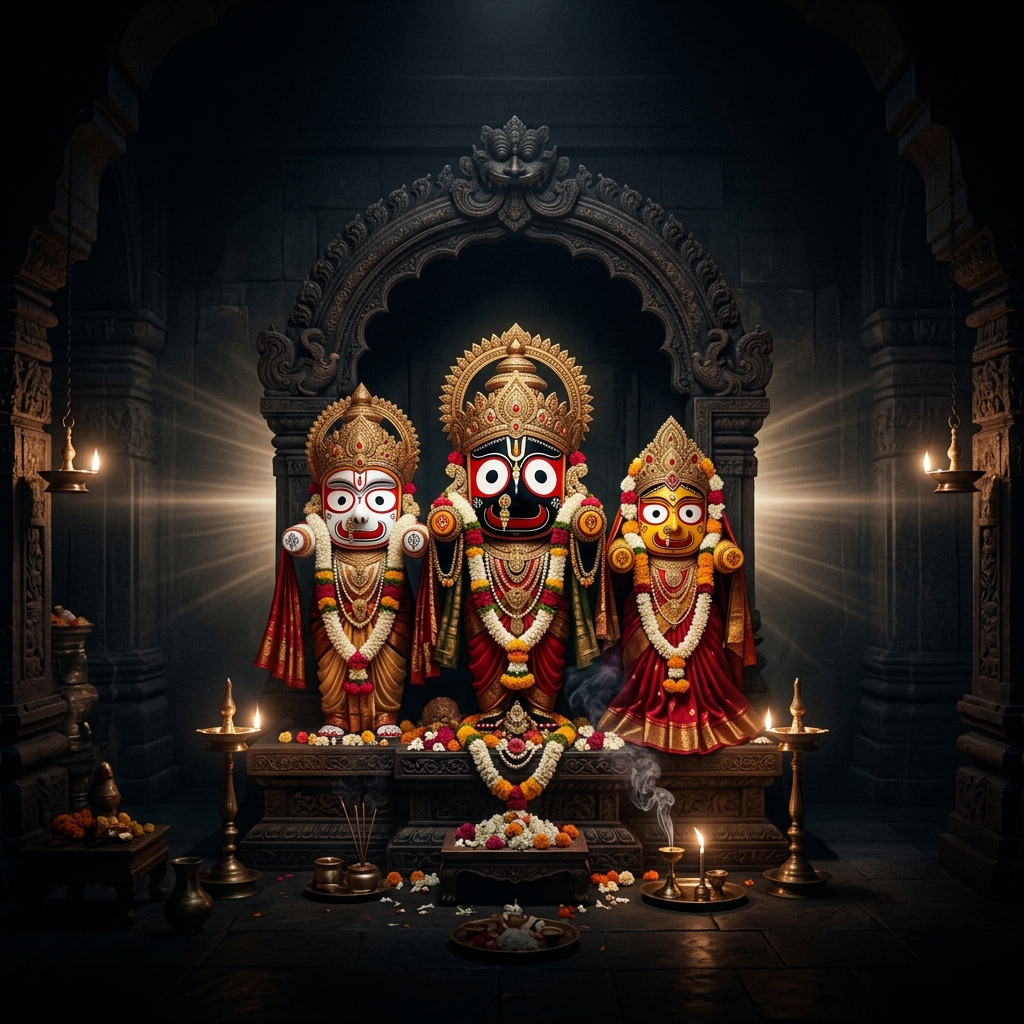
The rituals of Shree Jagannath Temple in Puri are rich with deep philosophical symbolism, and Netra Utsav is one of the most mesmerizing. Literally translating to "The Festival of the Eyes," this ritual occurs right before the grand Rath Yatra, signaling the rebirth of the Lord's vision after a period of divine illness.
The Anasara Period
Following the Snana Yatra (the grand bathing festival), the deities are said to fall ill from the sheer volume of cool water poured over them. They retire to a secret chamber called the Anasara Ghara, away from public view for 15 days. During this period, the temple is closed to the general public, and traditional Ayurvedic roots and herbs are offered to cure the ailing gods.
The paint on the wooden deities fades during this period. The traditional servitors, specifically the Dutta Mahapatra sevayats, are tasked with restoring the deities to their radiant glory.
The Painting of the Eyes
Netra Utsav marks the culmination of this restorative period. While the bodies of the deities are repainted, it is the painting of the eyes that holds the highest spiritual significance. Lord Jagannath is famously characterized by his massive, round, unblinking eyes - often referred to as Chaka Akhi.
The Chaka Akhi symbolize the Lord's omnipresence and endless vigilance. He never sleeps, never blinks, and is constantly watching over the universe. On the day of Netra Utsav, the pupils of the deities are painted in a highly secretive and sacred ritual. The black soot used for the pupils is collected from the sacred lamps in the temple.
The Philosophical Significance
The Netra Utsav is not merely a physical touch-up of wooden idols; it is the infusion of life and consciousness into the deities. According to the Agamic traditions, the opening of the eyes is what invites the divine presence (Prana Pratishtha) back into the physical forms.
When the eyes are finally painted and opened, it is believed that the first glance of the Lord is so immensely powerful and compassionate that it washes away the sins of whoever it falls upon. This is why thousands of devotees throng to the temple the next day for the Naba Joubana Darshan (the viewing of the renewed youth), to catch the first merciful glance of the Lord.
A Vision for All
Netra Utsav reminds us that spirituality is a mutual exchange of vision. While the devotee comes to see the Lord (Darshan), it is equally important that the Lord sees the devotee. The massive painted eyes of Jagannath are a reassurance to the world: you are seen, you are known, and you are loved.