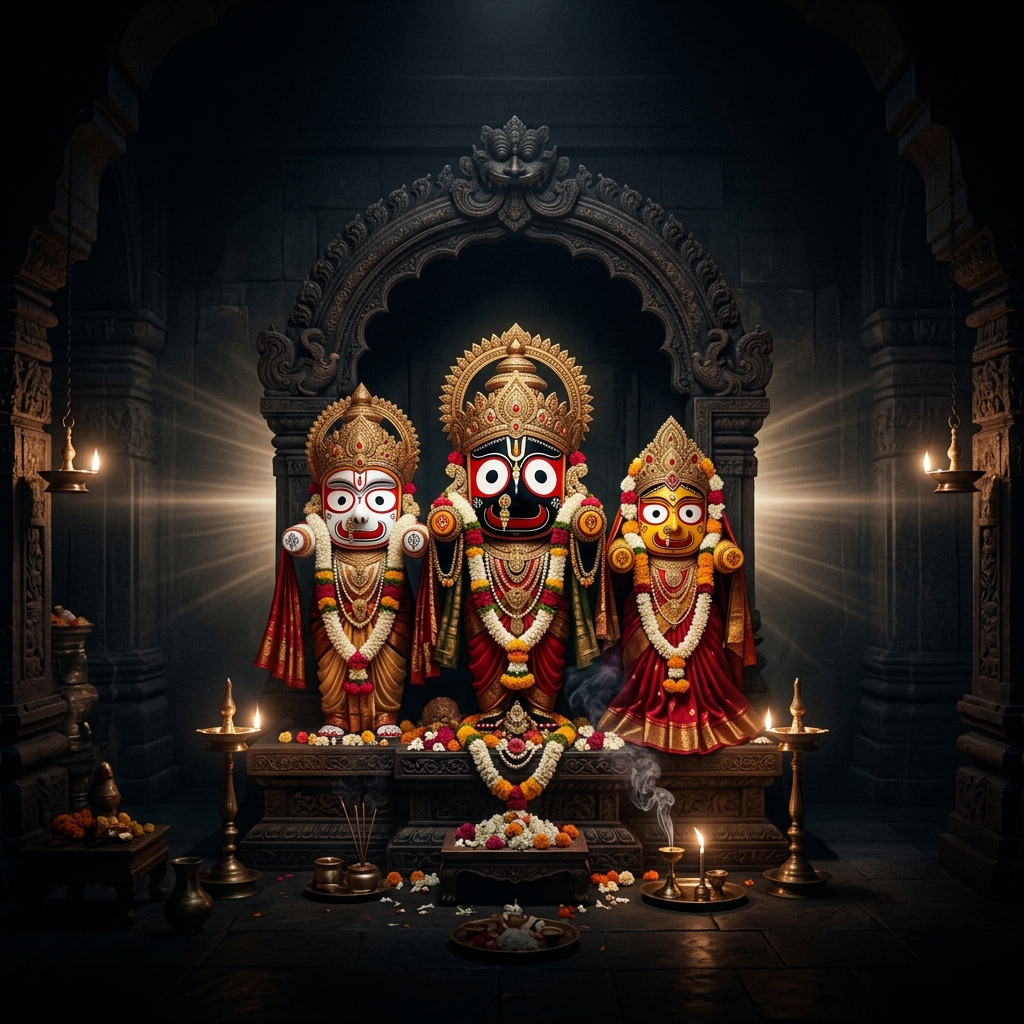
Occurring on the full moon day of the Hindu month of Jyeshtha, Deva Snana Purnima is considered the birthday of Lord Jagannath. It is an incredibly unique festival that kicks off the entire Rath Yatra cycle and vividly demonstrates the human-like attributes of the Lord of the Universe.
The Grand Bath
On this day, the deities are brought out of the dark inner sanctum in a rhythmic procession (Pahandi) to a massive, elevated platform within the temple courtyard known as the Snana Mandapa (Bathing Altar). This platform is so high that devotees standing outside the Meghanada Pacheri (outer wall) can catch a glimpse of the Lord.
The core ritual involves bathing the deities with exactly 108 pots of sacred, herbal water. This water is drawn from a specific, sacred well within the temple complex called the Suna Kua (Golden Well), which remains sealed for the rest of the year. The water is infused with sandalwood paste, camphor, saffron, and various aromatic herbs.
The Hati Besha (Elephant Attire)
After the grand bath, the deities are dressed in a spectacular attire known as the Hati Besha or Gajanana Besha. Lord Jagannath and Lord Balabhadra are adorned with massive, intricately crafted masks that make them look like Lord Ganesha, the elephant-headed god.
According to legend, a great scholar of Lord Ganesha from Maharashtra once visited Puri. He was a staunch devotee of Ganesha and refused to accept Jagannath as the Supreme Lord unless he saw his beloved elephant god in him. To honor the devotion of this scholar, Lord Jagannath assumed the form of Ganesha, proving that He encompasses all deities within Himself.
The Divine Fever (Anasara)
The climax of the Snana Purnima is perhaps the most fascinating aspect of Jagannath Tattva. After being drenched with 108 pots of cool water in the peak of the Indian summer, the deities are said to catch a severe cold and fever.
They are immediately moved away from public view into a secret sick room called the Anasara Ghara. For the next 15 days, the temple is closed to the public. The daily grand offerings (Chhapana Bhoga) are stopped, and the deities are treated with traditional Ayurvedic medicines, fruit juices, and roots by a specific group of servitors called the Daitapatis.
This period of sickness profoundly humanizes the Divine, bridging the gap between God and devotee through vulnerability and care.