The tension between Karma (the strict law of cause and effect) and Kripa (unconditional divine grace) is a central debate in Hindu philosophy. If the law of Karma dictates that every action must have an equal reaction, how can God forgive sins? If God freely forgives sins via grace, does that render the cosmic law of Karma meaningless?
The Jagannath Tattva offers a deeply comforting and profound resolution to this paradox.
The Omnipresence of Karma
In the Odia spiritual tradition, especially in the writings of the Panchasakha, Karma is acknowledged as the fundamental framework of the universe. Even the Lord Himself respects this law. According to legend, when Lord Krishna was accidentally killed by the hunter Jara Savara, it was seen as the karmic result of Krishna (in his previous avatar as Rama) killing the monkey king Vali from hiding.
If the Supreme Lord subjects Himself to the law of Karma to uphold cosmic order (Dharma), then no mortal can escape it. Every individual must face the consequences of their actions.
The Mechanism of Grace (Kripa)
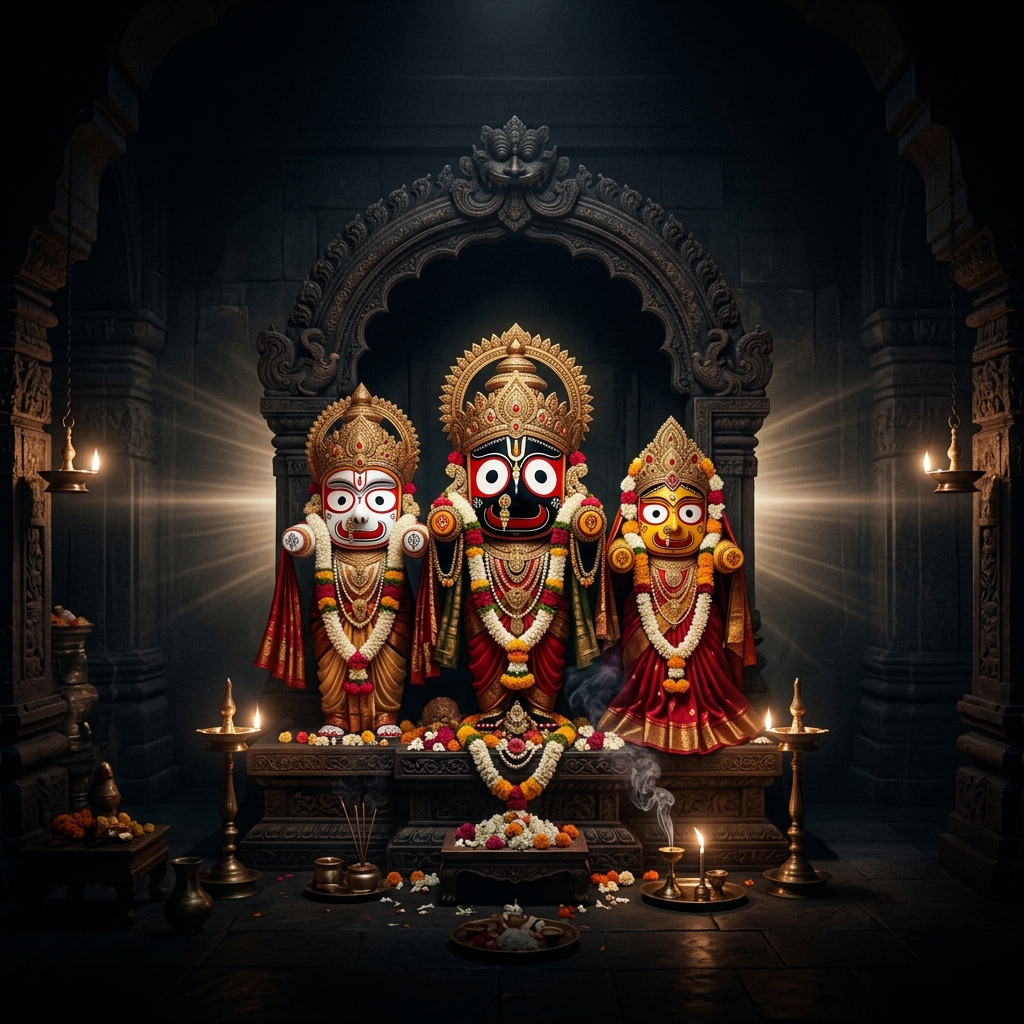
However, Lord Jagannath is also fundamentally worshiped as Kripasindhu (the Ocean of Grace). The resolution to the Karma vs. Grace paradox in Jagannath Tattva is subtle: Grace does not erase the event of Karma; it fundamentally alters the experience of it.
When a devotee surrenders completely to Lord Jagannath (Saranagati), the Lord takes over the devotee's karmic ledger. The devotee may still have to undergo a painful karmic consequence, but through the Lord's grace, what would have been a spiritually devastating blow is transformed into a minor physical or material inconvenience.
For example, a devotee destined to suffer a fatal accident due to past karma might instead only suffer a minor cut. The law of Karma is technically fulfilled (blood is shed), but the grace of the Lord drastically mitigates the suffering.
The Ultimate Surrender
Furthermore, the ultimate grace of Lord Jagannath is the granting of [Kaivalya](/philosophy/kaivalya-moksha) (liberation). In the Jagannath tradition, eating the Lord's Mahaprasad is considered an act of receiving His direct grace. It is believed that prolonged devotion and consumption of Kaivalya slowly burns the seeds of future karmas, ensuring that no new binding actions are generated.
Thus, Jagannath Tattva teaches that while we must walk the path our past actions have paved, the Lord's grace acts as an umbrella, protecting us from the harshest storms of our own making.