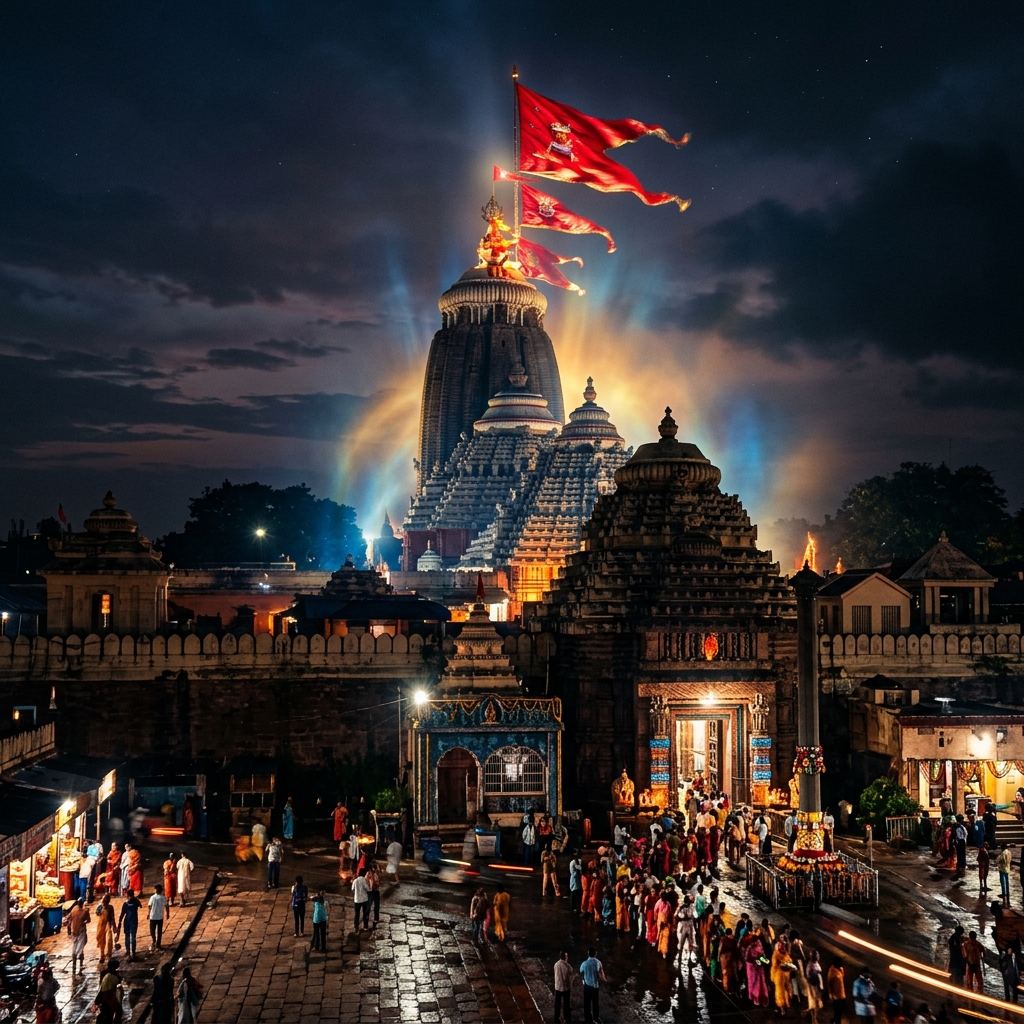
Throughout history, kings and emperors have claimed divine right to rule, often portraying themselves as gods on earth. In Odisha, however, a unique political-religious theory evolved under the Ganga and Suryavamsi dynasties: the king was not the master of the land; Lord Jagannath was the sovereign ruler (Rastra Devata), and the king was merely his humble deputy (Rauta).
The Origin of the Gajapati Title
The title Gajapati translates to "Lord of the Elephants," denoting the massive elephant armies possessed by the Odishan monarchs. King Anangabhima Deva III of the Ganga dynasty was the first to formally declare his empire as the Purushottama Samrajya (the Empire of Lord Jagannath) in the 13th century. He stated that he ruled the kingdom strictly under the orders of the Supreme Lord.
This master-servant relationship fundamentally altered the political structure of Odisha. Rebellion against the king was considered treason against Lord Jagannath Himself.
The Adya Sevaka (The First Servitor)
Even today, the Gajapati Maharaja of Puri is revered as the Adya Sevaka - the first and foremost servitor of the Lord. He has no administrative power over the state of Odisha in modern democratic India, but within the temple, his ritualistic authority is supreme.
The most famous manifestation of this servitude is the Chhera Pahanra ritual during the Rath Yatra. Before the chariots can be pulled, the Gajapati King arrives in a palanquin, climbs aboard the chariots, and sweeps the wooden floors with a golden broom. By performing the job of a humble sweeper in front of millions of people, the king demonstrates that before the Lord of the Universe, the highest monarch is nothing but a common servant.
The Legacy of the Khurda Dynasty
When the original Suryavamsi Gajapati lineage ended and Odisha fell into political turmoil, the dynasty shifted its capital to Khurda under King Ramachandra Deva I in the 16th century. He was hailed as the "Second Indradyumna" for his heroic efforts to recover the hidden Brahma (life force) of the deities and reinstall them in the temple after it was desecrated by Kalapahada.
Today, the current Gajapati Maharaja, Dibyasingha Deb, continues this ancient, unbroken lineage. The Odia calendar itself (the Anka year) is calculated based on his reign, a testament to the enduring bond between the throne of Odisha and the altar of Lord Jagannath.