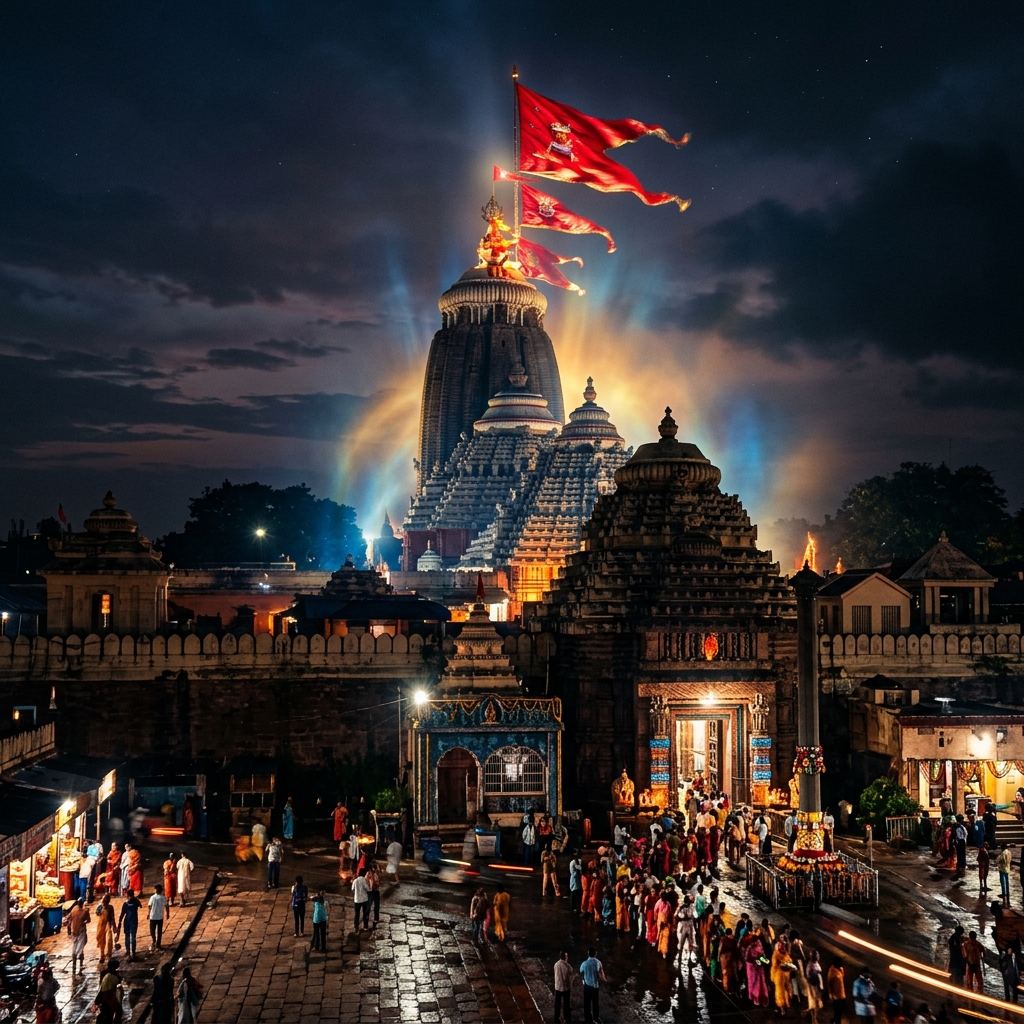
What is Kaivalya?
In Hindu philosophy, Moksha is the ultimate goal - liberation from the cycle of rebirth. In the Jagannath tradition, this is specifically referred to as Kaivalya. Interestingly, Mahaprasad itself is synonymous with Kaivalya, meaning that consuming the Lord's food is equivalent to attaining liberation.
The Four Types of Mukti
Traditionally, there are four types of liberation:
- Salokya: Residing in the same realm as God.
- Samipya: Being in the close proximity of God.
- Sarupya: Acquiring a form similar to God.
- Sayujya: Merging completely into the divine.
"In Purushottama Kshetra, the Lord grants a unique form of grace. You do not need to seek asceticism in the Himalayas; salvation is found in the joy of His festivals, the sweetness of His food, and the sight of His round eyes."
The concept of Kaivalya in Puri is fundamentally joyous. It asserts that life need not be renounced to find God. Through pure devotion (Bhakti) and surrender (Saranagati) to the Daru Brahma, liberation is effortlessly achieved.