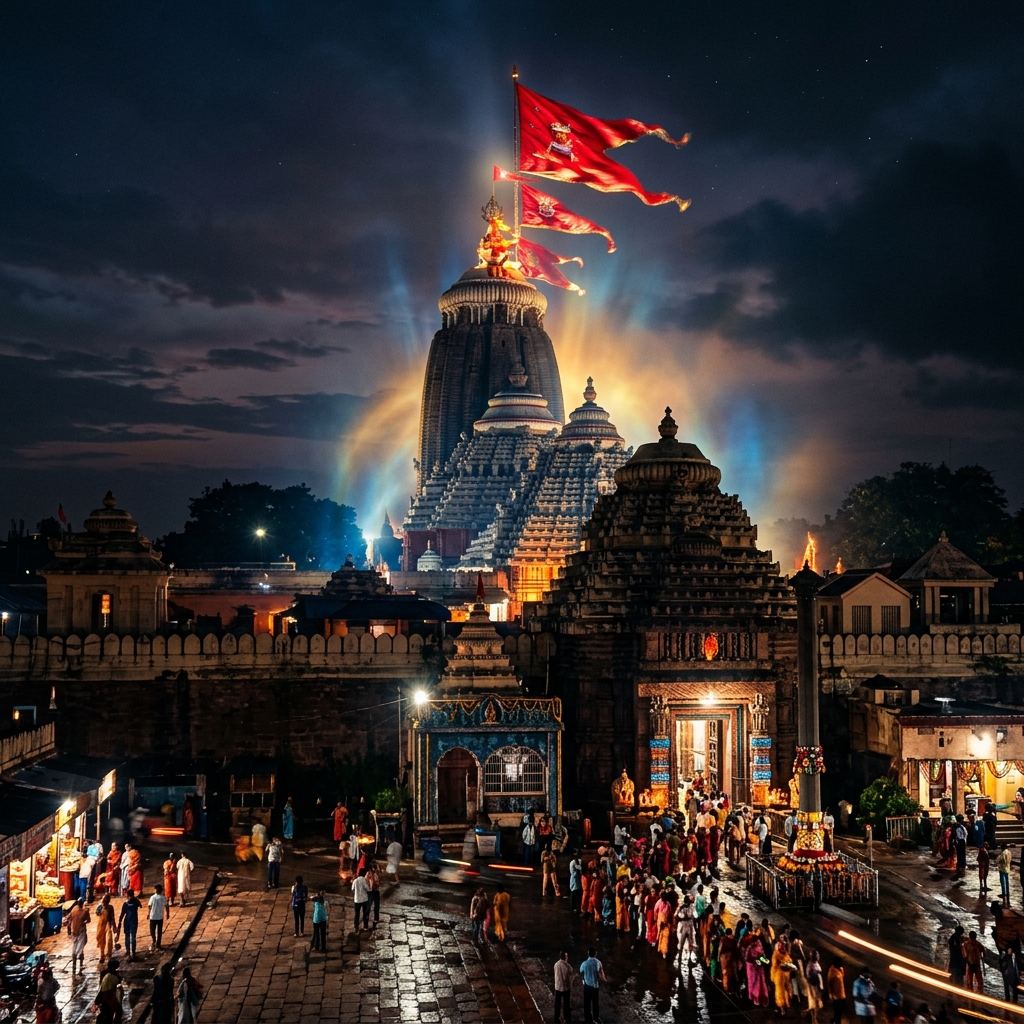
The Origin and History
The current Shree Jagannath Temple in Puri was initiated by the Ganga dynasty king, Anantavarman Chodaganga Deva, in the 12th century CE. It stands as a monumental achievement of the Kalinga style of architecture. The temple complex covers over 400,000 square feet and is enclosed by two massive walls: the outer Meghanada Pacheri and the inner Kurma Bheda.
The Kalinga Style
The main temple consists of four distinct structures in a linear alignment:
- Deula (Vimana): The towering main sanctum sanctorum where the deities reside.
- Jagamohana: The assembly porch where devotees gather for darshan.
- Nata Mandapa: The dancing hall, historically used for Devadasi performances.
- Bhoga Mandapa: The offering hall where the legendary Mahaprasad is presented.
"The Nilachakra (Blue Wheel) perched atop the 214-foot tall main temple is a marvel. It is said that the flag atop the wheel always flutters in the opposite direction of the wind."
The Meghanada Pacheri
The massive outer wall, known as the Meghanada Pacheri (Wall of Cloud-Sound), serves a unique acoustic purpose. Once a devotee steps inside the Lion's Gate (Singhadwara), the roaring sound of the nearby ocean completely vanishes, creating an atmosphere of instantaneous peace and divine silence.