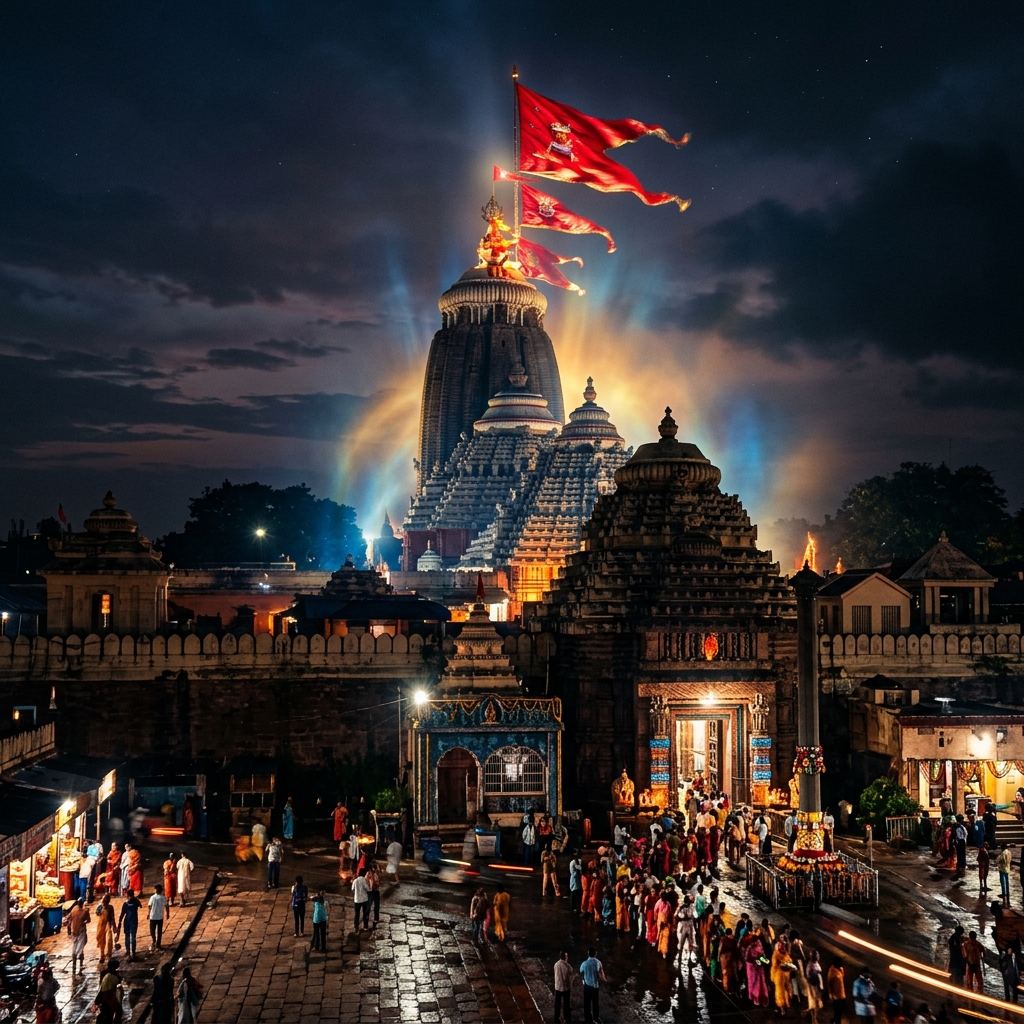
The Concept of Niti
The worship of Lord Jagannath is a complex and highly systematized process known as Niti. Unlike abstract deities who are worshiped purely with mantras, Lord Jagannath is treated as a living sovereign - a divine king who has human-like daily needs. He wakes up, brushes his teeth, bathes, changes clothes, holds court, eats multiple meals, and goes to sleep.
The Daily Schedule
The daily rituals begin early in the morning and conclude late at night:
- Dwara Phita (Opening of the Doors): The day begins before dawn when designated Sevayats (servitors) open the main temple doors with traditional hymns.
- Mangala Alati: The first auspicious lamp offering of the day to wake up the Lords.
- Mailam & Tadap Lagi: Changing of the deities' clothes. The Lord is dressed in fresh cotton fabrics.
- Abakasha (Bathing and Brushing): The deities symbolically brush their teeth and bathe. Camphor water and sacred twigs are offered.
- Sakala Dhupa (Morning Meal): The first major food offering, accompanied by strict adherence to culinary rules.
- Pahuda (Rest): After dinner (Bada Singhara Besha), the deities are offered a fragrant flower dress, sung lullabies (Gita Govinda), and finally go to sleep.
"The Sevayats consider themselves not as priests, but as the intimate family members of the Lord. Their service is rooted in affection (Bhaba) rather than strict Vedic orthodoxy."
The meticulous execution of these rituals requires the coordination of over 100 different categories of servitors, each holding hereditary rights to their specific Seva.
Related Concepts and Sacred Geography
- Walk along the Grand Road of Devotion to understand where the chariots roll.
- Learn about the historical structures and monasteries flanking the road in Bada Danda: The Grand Road of Devotion > The Mathas of Bada Danda.
- Learn about the daily timeline of rituals conducted in the temple.