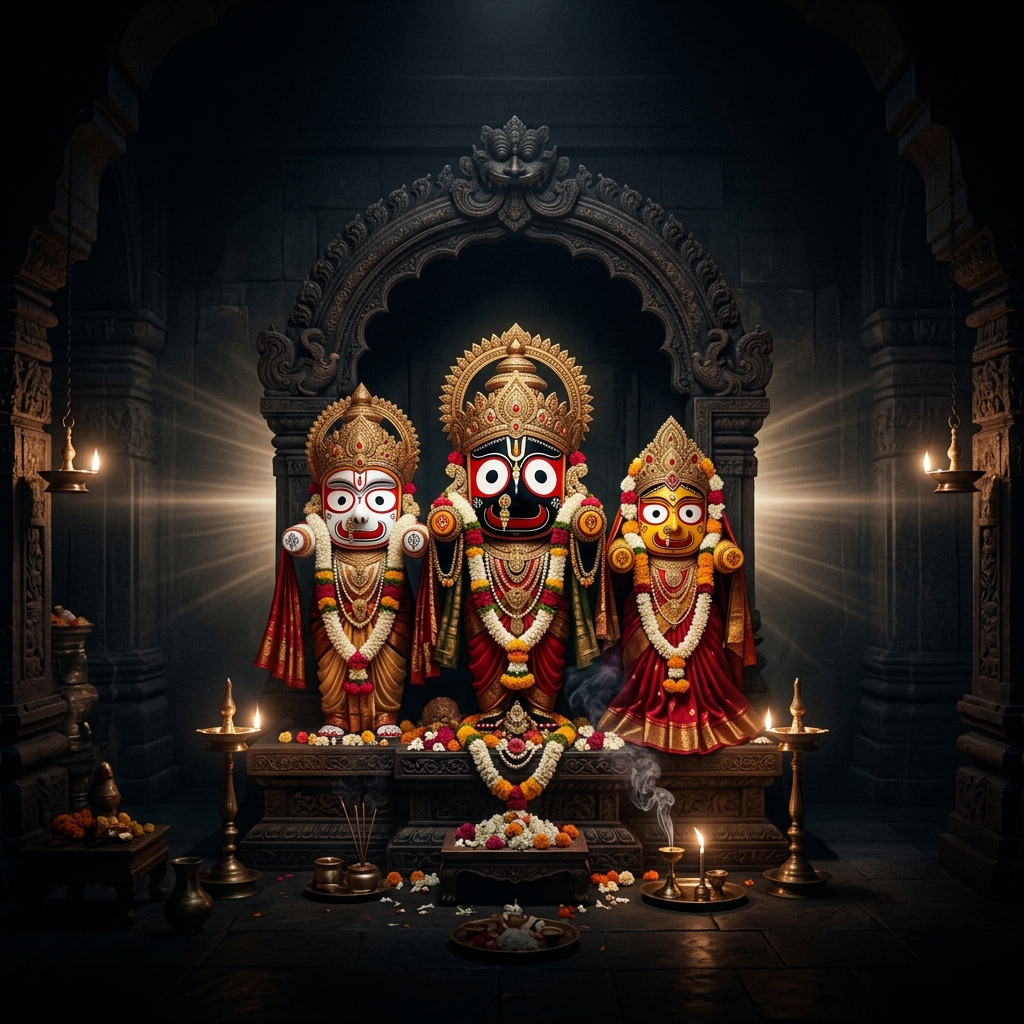
The daily management of the Shree Jagannath Temple is a monumental task, often compared to running a massive, ancient corporation where the CEO is Lord Jagannath Himself. The complex [niti](/rituals/daily-rituals-daily-rituals-niti)|daily rituals]], the massive kitchen operations, and the grand festivals require a highly organized workforce. This workforce is structured into a system known as the Chhatisa Niyoga.
The 36 Categories
The term Chhatisa Niyoga translates to "Thirty-six Categories of Service." Historically, it is believed that King Anangabhima Deva of the Ganga dynasty formalized this system, categorizing the various duties required for the Lord's worship into 36 distinct departments. Over the centuries, as the rituals grew more elaborate, the actual number of Niyogas has expanded to over 100, but the traditional name "Chhatisa Niyoga" remains.
These services (Sevas) are hereditary. A servitor (Sevak) inherits the right to perform a specific duty from their father, ensuring that the highly specialized knowledge required for the rituals is preserved and passed down through generations.
The Diverse Roles
The Niyogas cover every conceivable aspect of the deity's life, reflecting the belief that the Lord is a living emperor who needs constant care. Some of the prominent Niyogas include:
- Pati Mahapatra & Pujapandas: The highest order of Brahmin priests who are authorized to perform the core worship (Puja), offer food (Bhoga), and touch the deities during rituals.
- Daitapatis: The non-Brahmin servitors of tribal origin. They have exclusive rights over the deities during the Anasara (sickness period) and the Nabakalebara (changing of the wooden bodies), signifying the Lord's tribal roots.
- Suaras (Maha Suaras): The traditional cooks who manage the massive temple kitchen (Rosaghara) and prepare the Chhapana Bhoga.
- Singharis: The servitors responsible for the daily bathing and elaborate dressing (Besha) of the deities.
- Chunaras: The daring servitors whose duty is to climb the 214-foot tall temple tower every single day to change the flag tied to the Neelachakra.
A Microcosm of Society
The Chhatisa Niyoga system is a fascinating microcosm of historical Odia society. It integrates various castes, professions, and tribal communities into a single, unified purpose. From the Brahmin who chants the Vedas to the tribal who carves the wood, to the washerman who cleans the Lord's clothes, every role is considered sacred and indispensable. In the court of Lord Jagannath, true status is not determined by wealth or worldly power, but by the specific service one renders to the Lord.