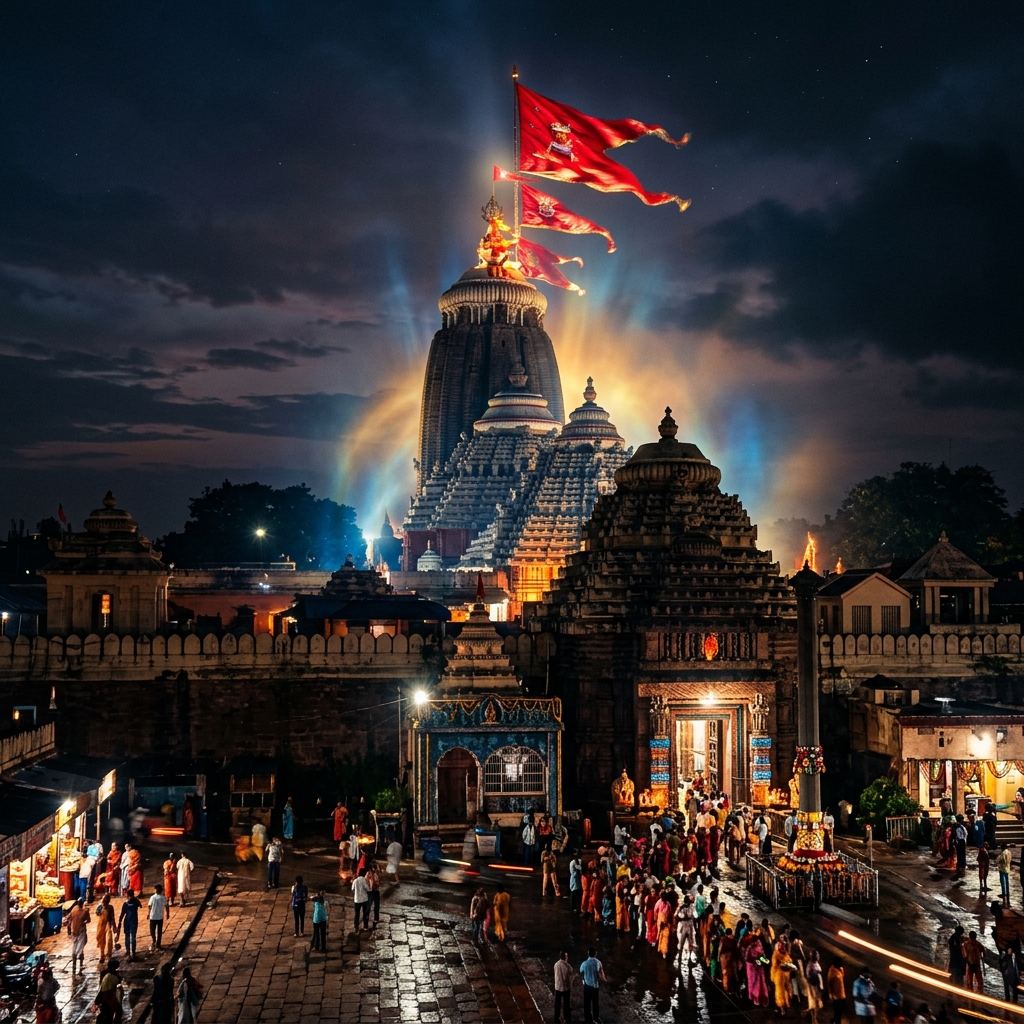
While the Shree Jagannath Temple is predominantly known as a Vaishnava shrine, its inner courtyard holds a secret that points to a profound synthesis of religious traditions. Situated in the southwestern corner of the inner enclosure (Kurma Bheda) is the temple of Goddess Vimala. She is not merely a subsidiary deity; she is the presiding Shakti (divine feminine energy) of the entire Kshetra (sacred region).
One of the Adi Shakti Peethas
According to the Tantric and Puranic traditions, the Vimala Temple is considered one of the four Adi Shakti Peethas (the most ancient and powerful seats of the Goddess). When Lord Shiva carried the burning corpse of Goddess Sati, her navel (or feet, according to some texts) fell at this exact spot in Puri.
Because of this, Puri is often referred to as a Shakta Peetha in Tantric literature. The worship of Vimala is older than the current structure of the Jagannath Temple itself. Before Lord Jagannath was established as the supreme deity by the Ganga kings, Goddess Vimala was highly venerated as the primary protector of the region.
The Transformation of Prasad into Mahaprasad
The theological power of Goddess Vimala is most evident in the daily food offerings of the temple. The massive quantities of food cooked in the temple kitchen (Rosaghara) are first offered to Lord Jagannath, Lord Balabhadra, and Devi Subhadra. At this stage, the food is merely considered Prasad (blessed food).
However, according to strict temple tradition, this Prasad cannot be distributed to the devotees yet. It must first be carried to the Vimala Temple and offered to Goddess Vimala. Only after she partakes of it does the food become Mahaprasad (the great blessed food) or [Kaivalya](/philosophy/kaivalya-moksha) (liberation). This ritual signifies that the grace of Vishnu (Jagannath) must be mediated and finalized through the grace of Shakti (Vimala).
Durga Puja in the Vimala Temple
While the Jagannath Temple strictly adheres to Vaishnava vegetarianism, the Vimala Temple follows distinct Tantric rituals. During the 16 days of Sharadiya Durga Puja, the atmosphere around the Vimala Temple changes dramatically.
In a highly secretive ritual performed late at night when the doors of the main Jagannath temple are closed, animal sacrifices (traditionally a male goat) are offered to Goddess Vimala. The meat is cooked and offered to her as Bimala Parusha, completely separate from the vegetarian Mahaprasad.
This startling contrast within the same temple complex highlights the incredible inclusivity of the Jagannath Tattva - a supreme theology that embraces and harmonizes the seemingly contradictory paths of Vaishnavism and Shaktism.