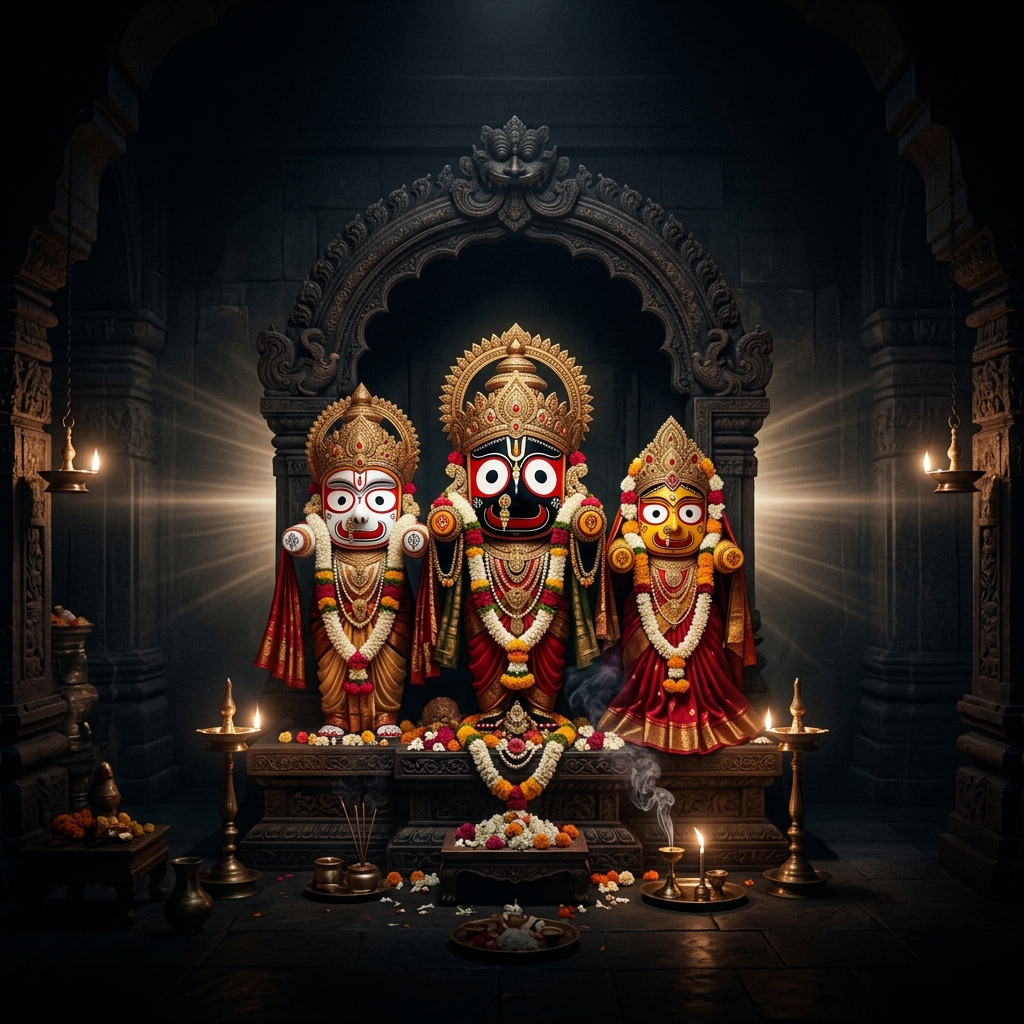
The cult of Lord Jagannath views Him as the supreme avatar of Lord Krishna. As such, many key events from Krishna's life as depicted in the Bhagavata Purana are ritually enacted in the Shree Mandira. One of the most theatrical and romantic of these festivals is the Rukmini Harana Ekadashi, celebrating the divine marriage of Krishna and Rukmini.
The Drama of the Elopement
Occurring on the eleventh day (Ekadashi) of the bright fortnight in the month of Jyeshtha, the festival is a literal re-enactment of a dramatic kidnapping. According to the Purana, Princess Rukmini was being forced by her brother Rukmi to marry the tyrant Shishupala. She secretly wrote a letter to Lord Krishna, begging him to rescue and marry her.
In the temple, the proxy deity of Lord Krishna (Madan Mohan) is prepared for the mission. The deity of Goddess Lakshmi plays the role of Rukmini. The dramatic enactment takes place within the temple complex. When Rukmini goes to worship at the Vimala Temple (representing the temple of Goddess Ambika in the original story), Madan Mohan suddenly arrives on a beautifully decorated chariot and "kidnaps" her in full public view.
The Battle and the Marriage
The drama continues as the representative of Shishupala (often a servitor or another proxy deity) chases after the couple. A mock battle is fought between the servitors representing the two factions, ending, of course, in the victory of Lord Krishna.
After the successful elopement, the deities are brought to the Vivaha Mandapa (the marriage altar). In a grand ceremony complete with Vedic chants, traditional Odia wedding songs, and massive feasts, the divine marriage of Madan Mohan (Krishna/Jagannath) and Rukmini (Lakshmi) is formalized.
The Tying of the Nuptial Knot
The marriage knot (Ganthi) is tied between the deities by the servitors, symbolizing the eternal union of Purusha (the Supreme Soul) and Prakriti (Nature/Energy). Thousands of devotees gather to witness this divine wedding, offering wedding gifts (Bhara) to the newly married couple.
The Rukmini Harana festival beautifully illustrates how the Jagannath Tattva uses high drama and storytelling to make the Divine accessible. By participating in the Lord's wedding as "guests," devotees feel a deep, personal connection to the deities, treating them not as distant idols, but as living, breathing members of their own family.