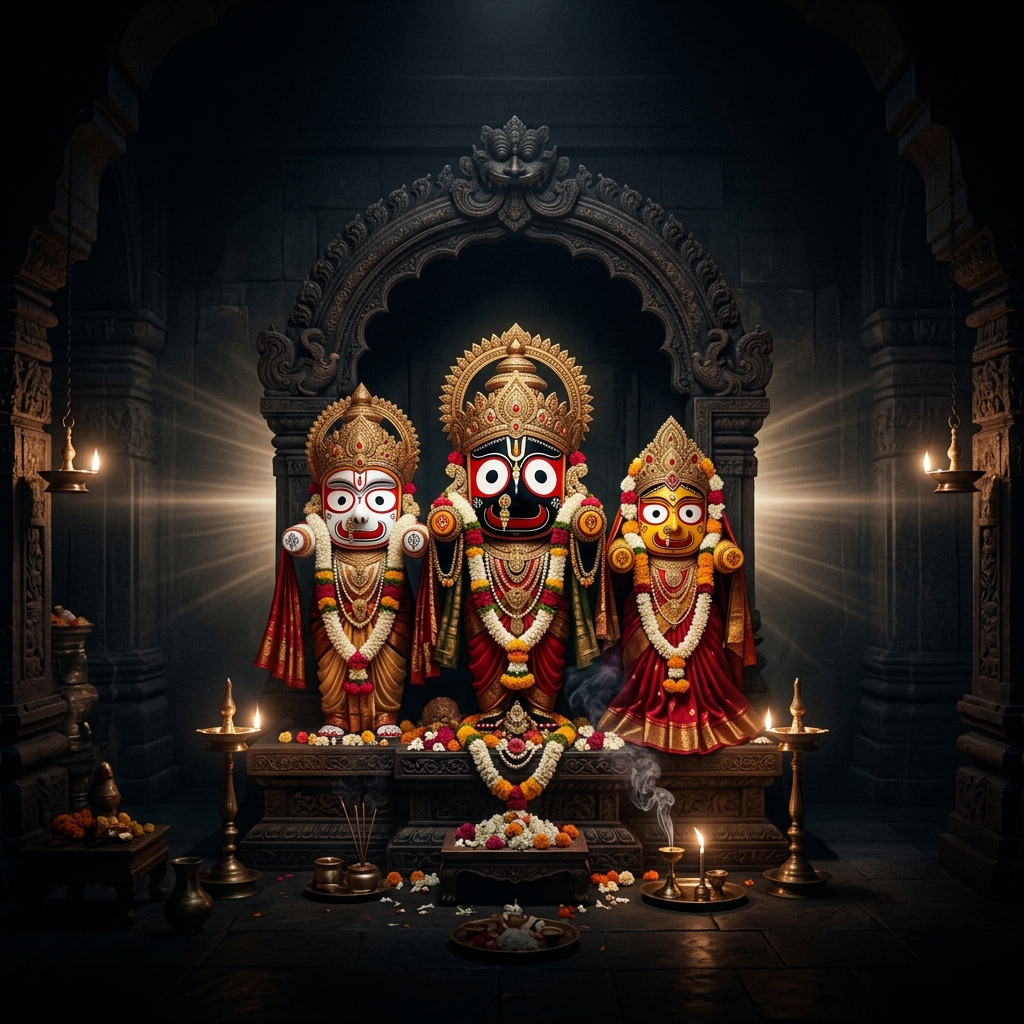
The most charming and relatable aspect of the Jagannath Tattva is the intense humanization of the Supreme Lord. He doesn't just sit rigidly on an altar; He feels the heat, He feels the cold, He falls sick, and most importantly, His appetite changes with the seasons.
The temple administration operates on a complex astrological calendar that dictates exactly what the Lord should wear and eat based on the current weather.
The Summer Diet (Grishma Ritu)
During the scorching months of the Odia summer (especially Vaisakha and Jyeshtha), the heavy, heat-inducing foods are drastically reduced. The focus shifts to foods that cool the body and hydrate the system.
- Tanka Torani: This is the most famous summer offering. It is a deeply refreshing, slightly sour drink made from fermented rice water (Torani), mixed with curd, lemon leaves, raw mango, green chilies, and roasted cumin. It acts as a natural coolant.
- Pakhala (Water Rice): The Lord is offered Dahi Pakhala (rice soaked in water and curd) instead of steaming hot rice.
- Water-rich Fruits: Offerings of watermelon, cucumber, and green coconut water become prominent. The heavy, fried sweets are replaced with lighter milk-based sweets.
The Winter Diet (Shita Ritu)
As the cold sets in during the months of Margashira and Pausha, the Lord's wardrobe changes to heavy woolen garments (Ghodelagi Besha), and His menu undergoes a massive transformation to provide warmth and energy.
- Pahali Bhoga: A special, highly anticipated winter breakfast consisting of a variety of deeply fried, hot, and heavy sweets made from black gram, wheat flour, and jaggery, such as Bada Jhili, Arisa, and Kakara.
- Heavy Spices: The use of warming spices like black pepper, cloves, and ginger increases significantly in the vegetable curries and Dalma.
- Rich Sweets: Foods packed with pure cow's ghee and dried fruits take center stage to help the Lord combat the cold winds from the sea.
The Philosophy of Care
This seasonal shifting of the menu is an expression of Vatsalya Rasa - the mood of treating God as a beloved child or family member who needs constant care.
In many religious traditions, God is the one who provides food to the humans. In Puri, while the Lord is recognized as the ultimate provider, the ritualistic framework flips the dynamic: the devotee is tasked with feeding the Lord. By carefully adjusting His diet to the seasons, the servitors ensure that the Supreme Being is kept comfortable, healthy, and deeply loved.