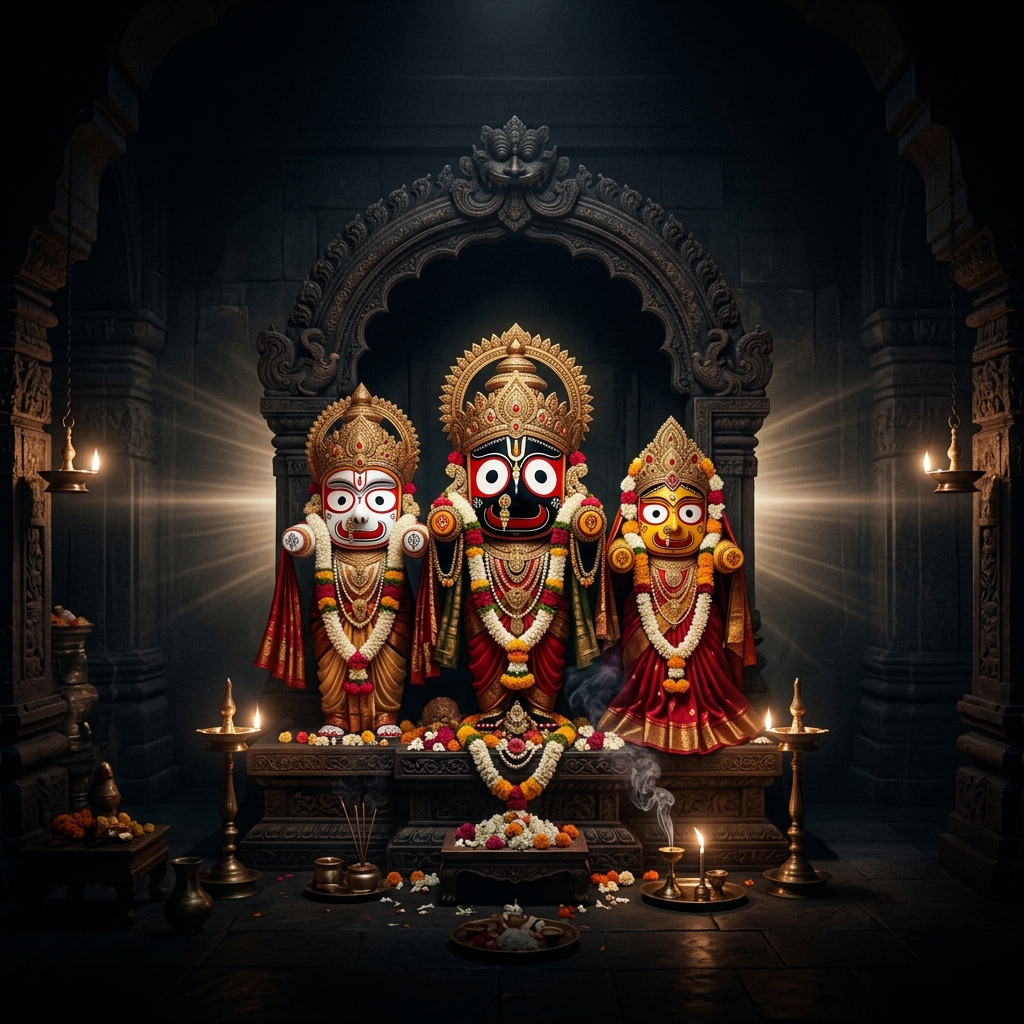
Of all the 56 items (Chhapana Bhoga) offered daily to Lord Jagannath, none holds a more emotional and nostalgic place in Odia culture than the Poda Pitha. Translated literally as "Burnt Cake" or "Baked Cake," it is a traditional delicacy that perfectly encapsulates the rustic, earthy nature of the Lord's diet.
The Traditional Recipe
Poda Pitha is vastly different from Western baked cakes. It uses no refined flour or baking powder. The traditional temple recipe is strict and ancient:
- A batter is made from soaked rice and urad dal (black gram), which is left to ferment slightly.
- It is mixed with jaggery (never refined sugar), grated coconut, chopped ginger, black pepper, and cardamom.
- The batter is wrapped tightly in fresh banana leaves or Sal leaves.
- Finally, it is placed in an earthen hearth and covered completely with hot embers and ash. It bakes slowly overnight.
The resulting cake has a dark, slightly charred, smoky crust and a soft, sweet, spicy interior.
The Offering During Bahuda Yatra
While Poda Pitha is offered in the temple throughout the year, its most famous appearance is during the Bahuda Yatra (the return journey of the chariots).
As the chariot of Lord Jagannath (Nandighosha) returns to the main temple, it stops near the Mausi Maa Temple (the temple of Goddess Ardhashini, considered the Lord's aunt). It is a deeply ingrained Odia tradition that an aunt always feeds her visiting nephew his favorite food. In this case, the Mausi Maa offers the Lord a massive Poda Pitha.
The Philosophy of the Burnt Crust
The Poda Pitha is a brilliant theological metaphor. The dark, burnt exterior represents the hardships and the physical shell of the material world. The sweet, soft interior represents the pure soul and the inherent sweetness of the Divine.
Lord Jagannath accepts the "burnt" cake to show that He accepts His devotees with all their flaws, burns, and imperfections, as long as the core of their devotion is sweet. It is a deeply humanizing aspect of the cult, portraying the Supreme God not as a distant monarch demanding gold, but as a beloved nephew who just wants a slice of His aunt's homemade cake.