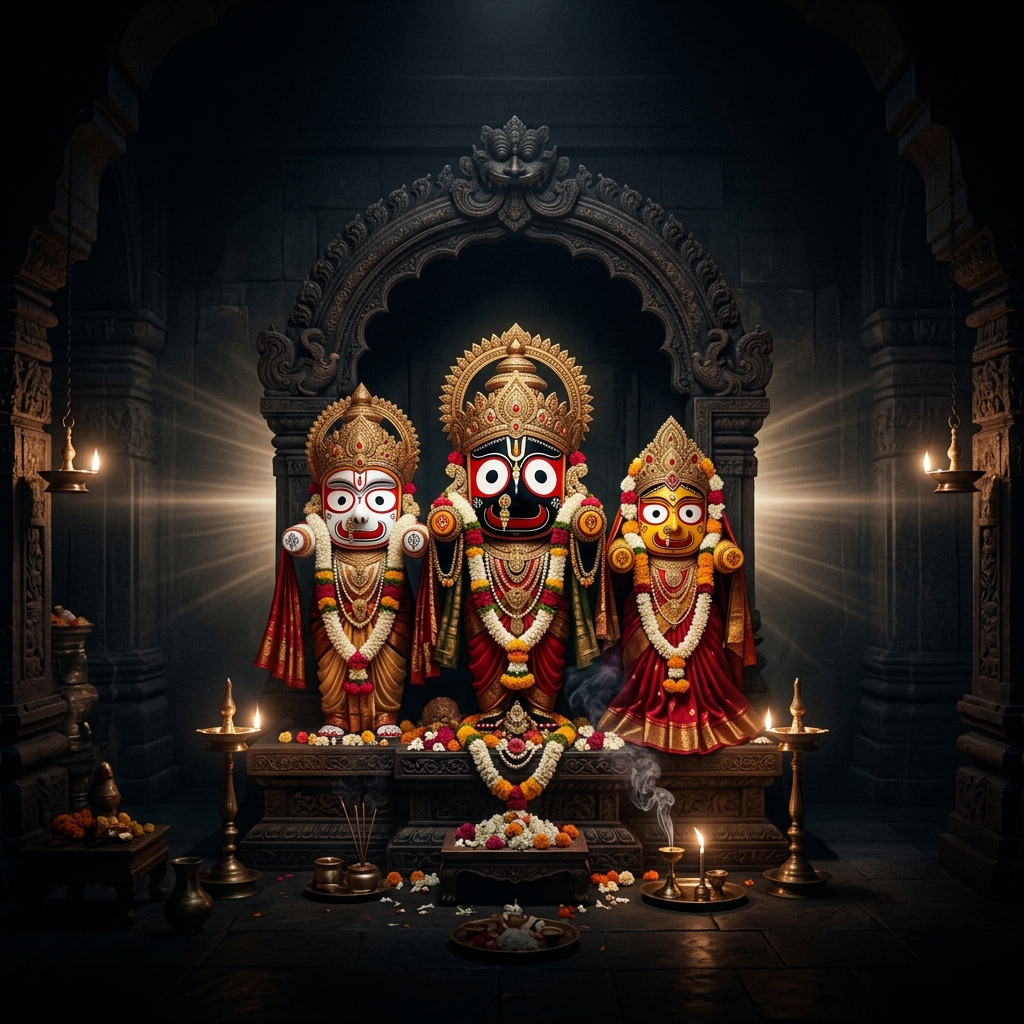
In the modern era of stainless steel and non-stick cookware, the Shree Jagannath Temple remains fiercely committed to ancient methods. The massive quantities of food prepared daily in the temple kitchen (Rosaghara) are cooked exclusively in traditional earthen pots known as Kudua.
The Kumbhara Niyoga
The production of these earthen pots is a massive, highly organized industry in itself. A specific group of servitors known as the Kumbhara Niyoga (the potters' guild) is tasked with supplying thousands of new pots to the temple every single day.
These potters live in specific villages around Puri. They source a particular type of pure clay, shape the pots on traditional wheels, and fire them in kilns. The pots must be perfectly shaped to stack efficiently on top of each other over the temple hearths. Crucially, once a Kudua is used to cook food and the Mahaprasad is eaten, it is immediately broken and discarded. A Kudua is never reused, ensuring absolute ritual purity.
The Magic of Stacking
The cooking technique involving the Kudua is nothing short of an engineering marvel. In the Rosaghara, the earthen hearths are designed so that the heat travels upwards effectively.
The Suara servitors stack up to seven or nine Kuduas on top of a single fire. Remarkably, the food in the topmost pot cooks first, followed by the second, and so on, down to the bottom pot. This defies conventional thermodynamics and is considered by devotees to be a daily miracle performed by Goddess Lakshmi. The porous nature of the clay also allows the food to cook slowly and evenly, retaining its incredible flavor and nutritional value.
Spiritual Simplicity
The insistence on using earthen pots reflects a profound philosophical grounding. Earth (Mati) is the most basic, humble element. By accepting His grand feasts cooked in simple clay pots, Lord Jagannath demonstrates that He does not care for golden vessels or worldly ostentation; He cares only for the purity of the offering.
Furthermore, the breaking of the pots after the meal serves as a powerful reminder of the transient nature of the physical body. Just as the clay pot is formed from the earth, serves its purpose, and returns to the earth in pieces, the human body too must eventually return to dust, while only the devotion (the Mahaprasad within) remains eternal.