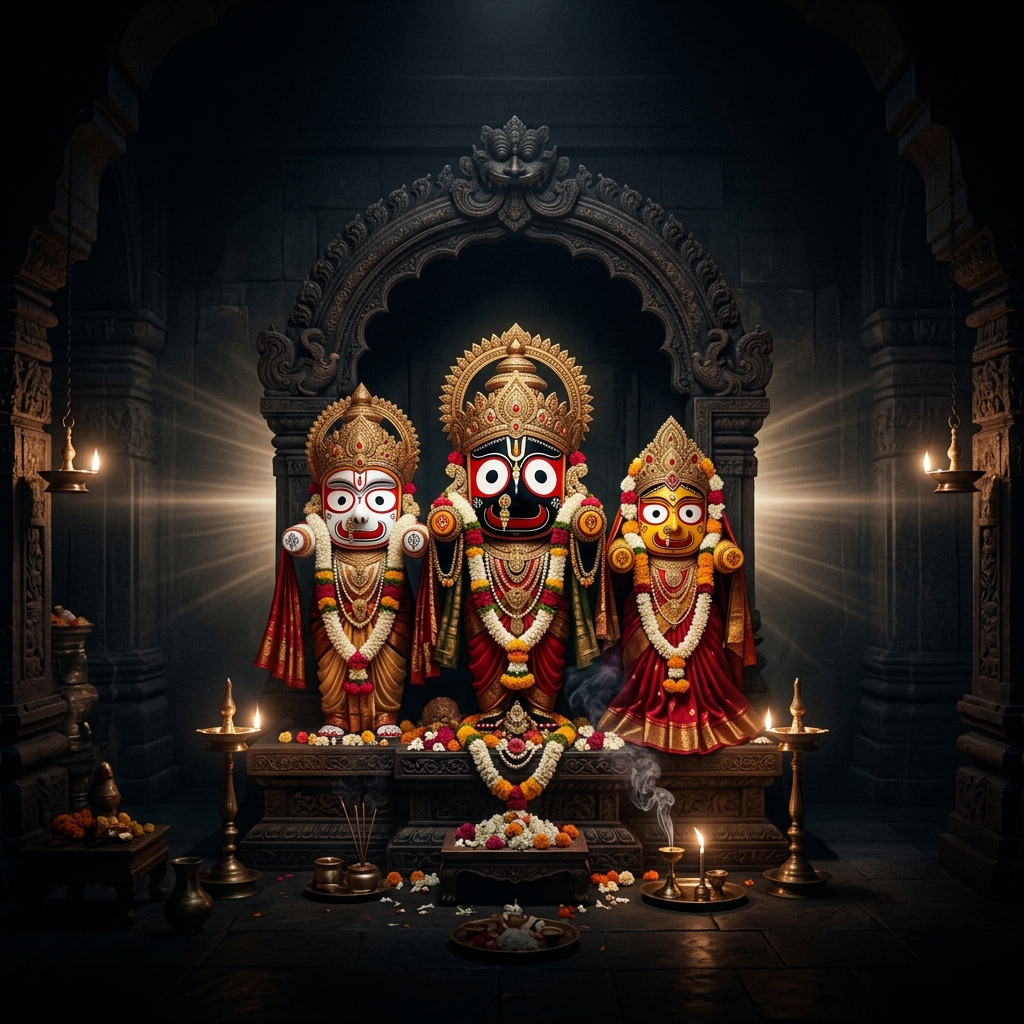
Nabakalebara: The Cycle of Rebirth
Published on 10/19/2024
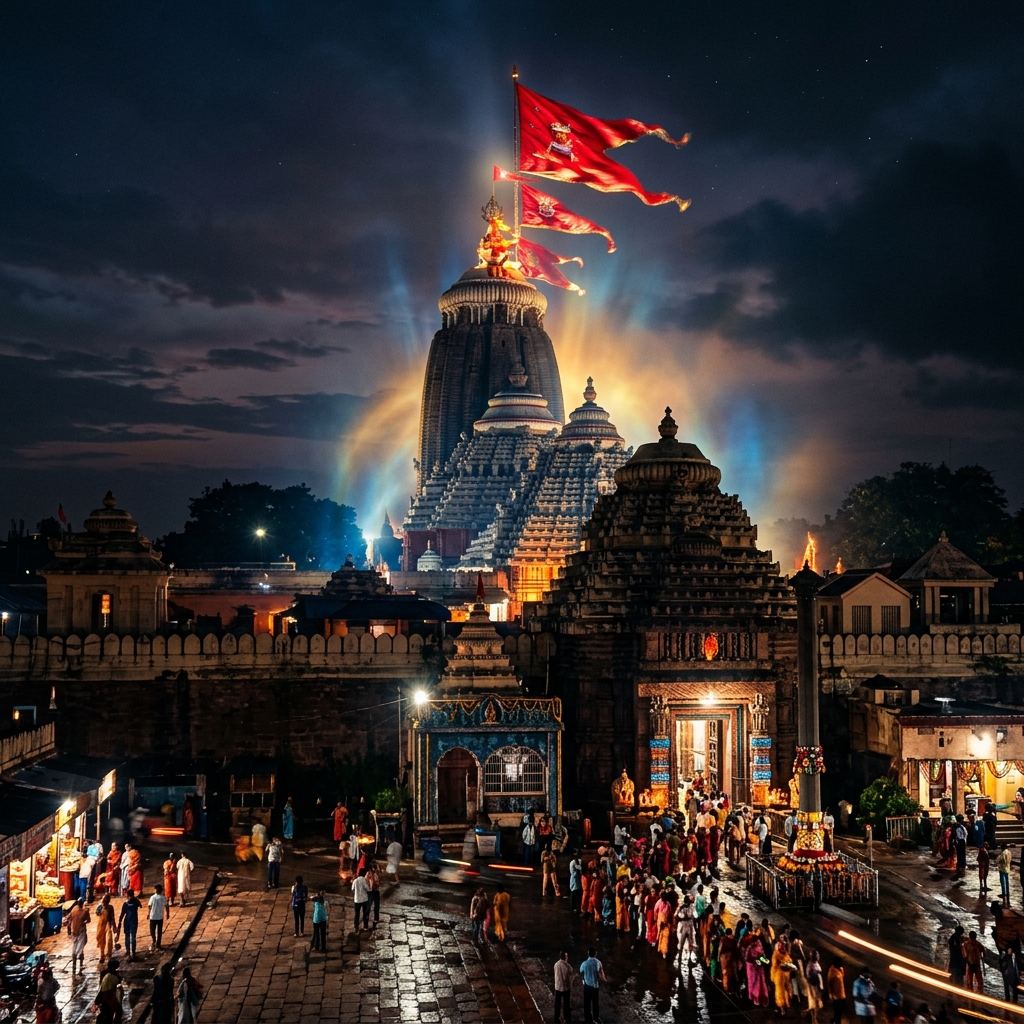
The New Body
Nabakalebara translates to "New Body." It is a grand and highly secretive festival that occurs when an extra month (Adhik Maas) falls in the Hindu month of Ashadha, usually every 12 to 19 years. During this time, the old wooden deities are buried, and new ones are carved.
Finding the Sacred Daru
The process begins with the Banayaga Yatra, where servitors travel to the Mangala Temple in Kakatpur. The Goddess guides them in their dreams to specific Neem trees that must possess strict supernatural signs:
- A conch, wheel, mace, and lotus naturally marked on the bark.
- An anthill near the roots.
- A snake guarding the tree.
"The carving of the deities is done in absolute secrecy within the Koili Baikuntha. The carpenters are blindfolded and their hands wrapped in cloth so they cannot see or feel the wood properly."
The Transfer of Brahma
The most mystical part of Nabakalebara is the transfer of the Brahma Padartha (the Supreme Soul material) from the old idol to the new. At midnight, a blindfolded priest transfers this mysterious, unseen entity. The old deities are then buried in the Koili Baikuntha in a ceremony mimicking a human funeral.