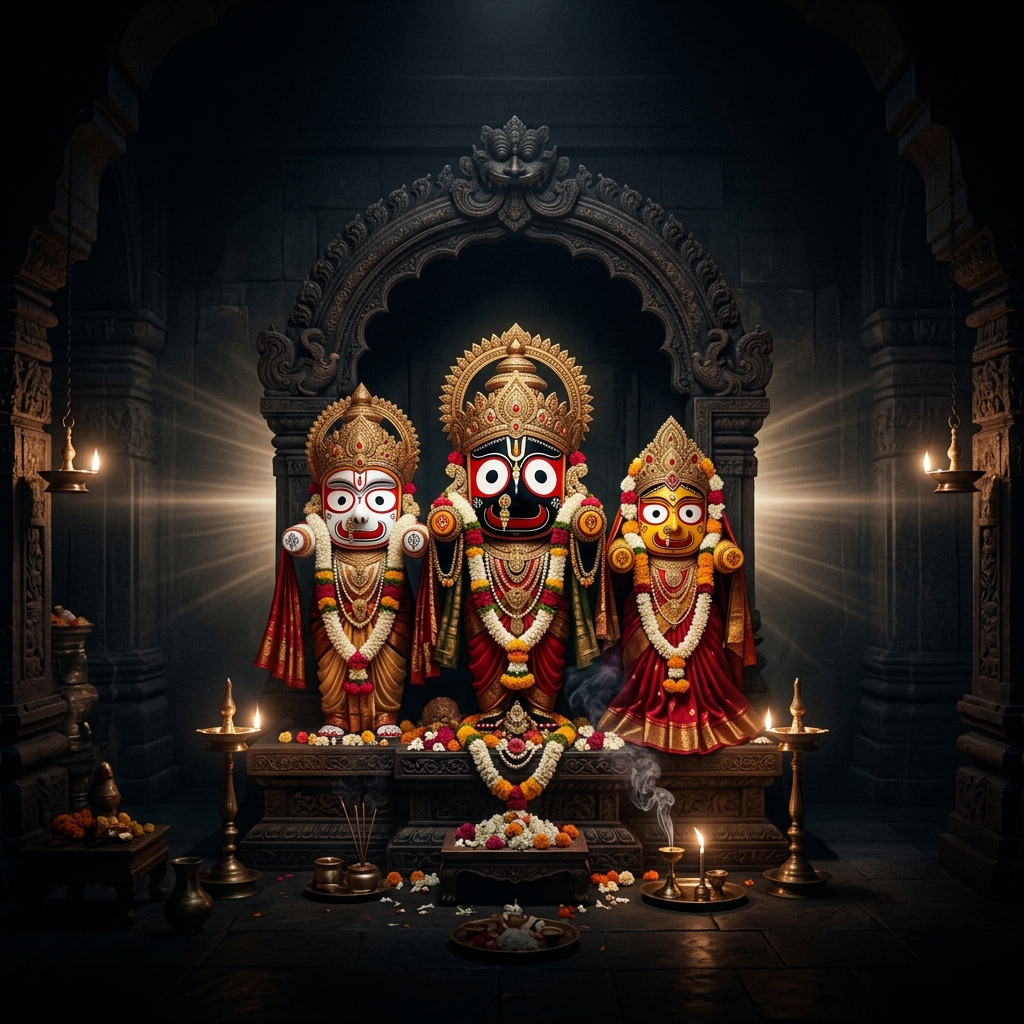
Makar Sankranti marks the transition of the sun into the zodiac sign of Makara (Capricorn) and its northward journey (Uttarayana). While it is celebrated across India with kites, bonfires, and harvest rituals, the celebration inside the Shree Jagannath Temple in Puri is deeply unique, blending astronomy with profound devotion.
The Special Dress: Makar Chaurasi Besha
On the day of Makar Sankranti, Lord Jagannath, Lord Balabhadra, and Devi Subhadra are dressed in a spectacular attire known as the Makar Chaurasi Besha. In this Besha, the deities wear magnificent crowns adorned with peacock feathers, along with heavy golden necklaces, earrings, and floral garlands.
The term "Chaurasi" refers to the number 84, which holds significant mystic value in Hindu numerology, symbolizing the 8.4 million species of life through which a soul must cycle before attaining a human birth. By adopting this Besha, the Lord acknowledges His dominion over all cycles of life and time.
The Makar Chaula Offering
The most important culinary aspect of the festival is the offering of Makar Chaula. This is a special, uncooked preparation made from newly harvested raw rice, mixed with jaggery, grated coconut, milk, chhena (cottage cheese), banana, and various spices like black pepper and cardamom.
The offering of newly harvested grain is a direct nod to the agrarian roots of the region. Lord Jagannath, often referred to as the Lord of the Earth, accepts the first fruits of the harvest from His devotees. This Makar Chaula is distributed among the devotees as Mahaprasad, symbolizing prosperity and sweetness for the coming year.
The Uttarayana Journey
Theological texts describe the Uttarayana (the six months of the sun's northern journey) as the "day of the gods," a highly auspicious period for spiritual activities. Makar Sankranti marks the dawn of this divine day.
In the Jagannath Temple, special rituals are performed to align the macrocosmic journey of the sun with the microcosmic rituals of the temple. The deities are offered special warmth-inducing foods and the temple's daily schedule is subtly adjusted to reflect the lengthening of the days. The festival beautifully intertwines the celestial mechanics of the universe with the daily life of the Supreme Lord.